BS 8214:2026 – What Has Changed and What It Means for You as the Client
Fire doors remain one of the most critical passive fire protection measures within any building. They protect escape routes, slow the spread of smoke and fire, and provide occupants with valuable time to evacuate safely.
However, following years of industry scrutiny, particularly after the Grenfell Tower tragedy, concerns have grown around poor installation, incompatible components, unclear responsibilities, and fire doors failing to perform as intended in real world conditions.
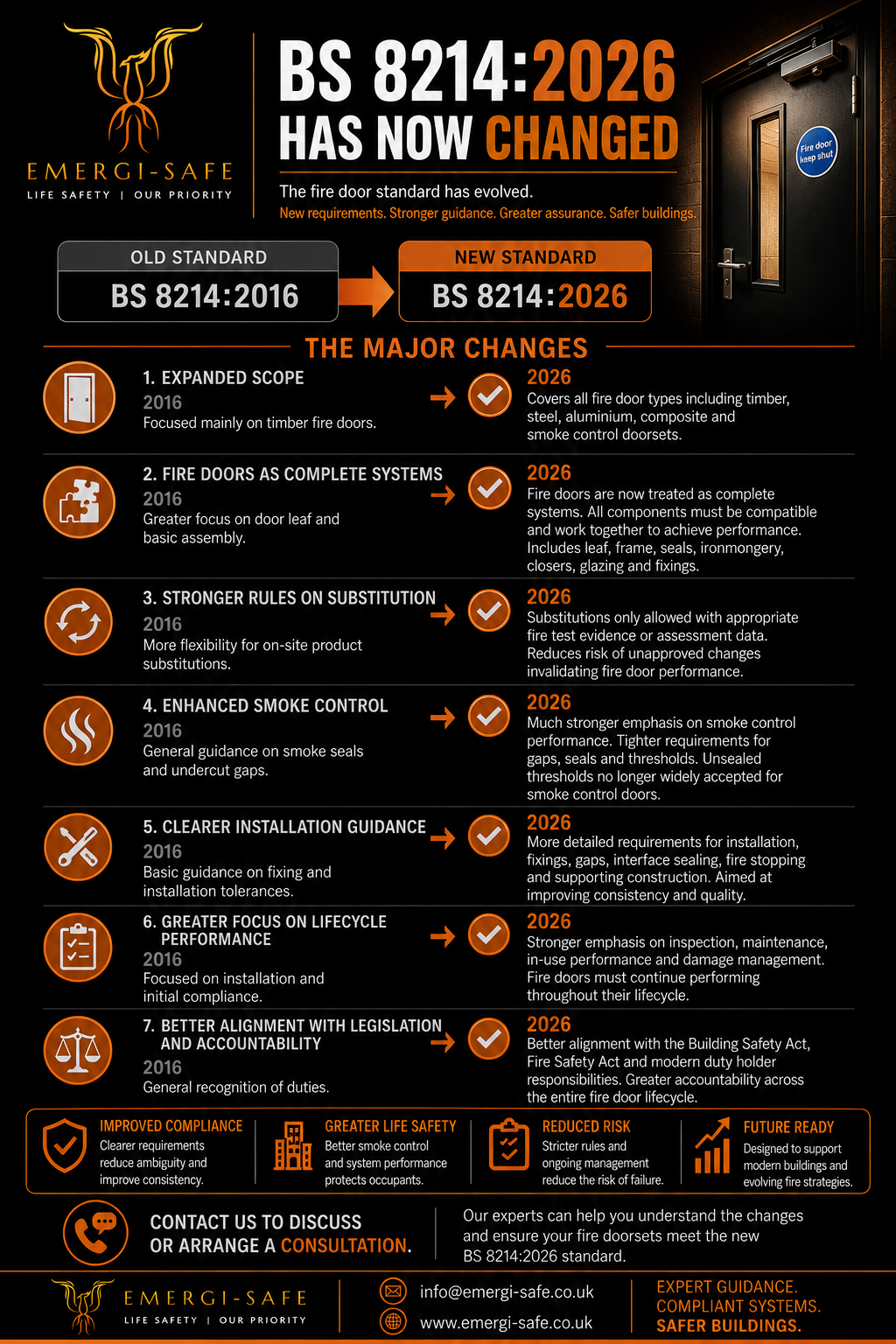
This is why the release of BS 8214:2026 represents such a major shift in fire door guidance across the UK construction and fire safety industries. The new standard replaces BS 8214:2016 and fundamentally changes how fire doors are viewed, specified, installed, inspected, and maintained.
The biggest message from the new standard is simple:
A fire door is no longer treated as a standalone product; it is now considered a complete life safety system.
Why Was BS 8214 Updated?
The 2016 edition primarily focused on timber-based fire door assemblies. Since then, the industry has evolved significantly, with greater use of:
- Steel fire doors
- Composite fire doors
- Aluminium systems
- Modular construction
- Electronic access control systems
- Smoke control strategies
At the same time, investigations across the industry highlighted recurring problems involving:
- Incorrect installations
- Unapproved alterations
- Poor maintenance
- Incompatible hardware
- Lack of traceability
- Excessive gaps and smoke leakage
BS 8214:2026 was introduced to address these issues by improving clarity, accountability, and performance expectations throughout the entire fire door lifecycle.
The Main Changes in BS 8214:2026
1. The Standard Now Covers All Fire Door Types
One of the largest changes is the expansion of scope.
BS 8214:2016 focused mainly on timber-based fire doors.
BS 8214:2026 now applies to:
- Timber fire doors
- Steel fire doors
- Aluminium fire doors
- Composite fire doors
- Smoke control doorsets
What This Means for Clients
This creates greater consistency across all building types and removes the previous lack of guidance surrounding metal and composite doors.
For clients, this means:
- More clearly defined compliance requirements
- Better installation guidance
- Improved consistency between contractors and manufacturers
- Greater scrutiny of all fire door systems, not just timber doors
2. Fire Doors Are Now Treated as Complete Systems
This is arguably the most important change within the new standard.
Previously, many projects treated the fire door leaf itself as the “fire door.”
BS 8214:2026 now makes it clear that the fire performance depends on the entire system, including:
- Door leaf
- Frame
- Hinges
- Closers
- Intumescent seals
- Smoke seals
- Glazing
- Ironmongery
- Fixings
- Installation quality
Why This Matters
Even a certified fire door can fail if:
- Incorrect hinges are installed
- Seals are missing
- Gaps are excessive
- The frame is poorly fitted
- Non-tested hardware is substituted
The new standard removes ambiguity by requiring all components to work together as a tested and compatible system.
What This Means for Clients
Clients can no longer simply purchase a “fire-rated door” and assume compliance.
There is now far greater emphasis on:
- System compatibility
- Installation evidence
- Product traceability
- Approved components
- Competent installers
This may affect procurement, contractor selection, and future maintenance arrangements.
3. Stricter Rules on Product Substitution
Historically, substitutions on-site have been common.
For example:
- Changing hinges
- Swapping closers
- Using different seals
- Replacing glazing systems
- Installing alternative locks
BS 8214:2026 introduces much tighter control over substitutions unless supported by appropriate fire test evidence or assessment data.
What This Means for Clients
This significantly reduces the risk of installers using “similar” products that may invalidate the fire door certification.
However, it also means:
- Greater documentation requirements
- More controlled procurement
- Potentially higher emphasis on certified systems
- Less flexibility for unapproved changes during construction
4. Greater Emphasis on Smoke Control
The revised standard places much stronger focus on smoke containment, not just fire resistance.
This includes updated guidance relating to:
- Smoke seals
- Threshold gaps
- Bottom-of-door sealing systems
- Leakage performance
- Alignment with BS 9991 evacuation guidance
One particularly important change is that unsealed thresholds are no longer widely accepted for smoke control doors.
Smoke is responsible for the majority of fire-related fatalities.
Improved smoke control:
Why This Matters
- Protects escape routes
- Improves tenability
- Supports phased evacuation
- Assists vulnerable occupants
What This Means for Clients
Existing doors with:
- Excessive undercuts
- Missing smoke seals
- Poorly fitting thresholds
- Damaged seals
may now be identified as non-compliant during inspections or fire risk assessments.
5. Clearer Installation Guidance
The new standard significantly strengthens installation guidance, particularly around:
- Frame fixing
- Gaps and tolerances
- Interface sealing
- Structural openings
- Supporting construction
- Fire stopping around frames
This helps reduce inconsistent installation practices that have historically caused widespread compliance failures.
What This Means for Clients
Clients should now expect:
- Higher installation standards
- Better quality assurance
- Increased photographic evidence
- More detailed certification
- Greater emphasis on installer competence
This also increases the importance of using third-party certified contractors wherever possible.
6. Better Alignment with Current Fire Safety Legislation
BS 8214:2026 now aligns much more closely with:
- The Building Safety Act 2022
- The Fire Safety Act 2021
- UKCA and CE marking requirements
- Modern duty holder responsibilities
What This Means for Clients
Responsible Persons, landlords, developers, and building owners now face greater accountability for ensuring fire doors:
- Are correctly specified
- Are competently installed
- Remain maintained
- Continue performing throughout their lifecycle
This is especially relevant in:
- Residential blocks
- Higher-risk buildings
- Healthcare premises
- Education settings
- Commercial developments
7. Increased Focus on Lifecycle Performance
BS 8214:2026 no longer focuses solely on installation.
The standard now places significant emphasis on:
- Ongoing inspection
- Maintenance
- In-use performance
- Damage management
- Operational reliability
What This Means for Clients
Fire doors are no longer considered compliant simply because they passed inspection on day one.
Clients are expected to ensure:
- Routine inspections take place
- Damage is repaired correctly
- Components remain compatible
- Doors continue functioning properly over time
This aligns closely with modern fire door inspection regimes already being adopted across the UK.
Does BS 8214:2026 Apply Retrospectively?
Like most British Standards, BS 8214:2026 is not strictly retrospective.
However, under fire safety legislation, Responsible Persons must ensure fire precautions remain suitable and sufficient.
In practice, this means:
- Existing doors may still require upgrades if deficiencies exist
- Fire risk assessments may reference current standards
- Refurbishment works are likely to trigger compliance reviews
- Poor-performing legacy doors may no longer be acceptable
Many buildings already contain fire doors that technically “exist” but fail modern expectations due to:
- Excessive gaps
- Missing seals
- Non-compliant hardware
- Damage
- Lack of certification
The Bigger Picture for Clients
The fire safety industry is moving away from “tick-box compliance” and towards demonstrable system performance.
BS 8214:2026 reflects this shift by introducing:
- Greater accountability
- Better traceability
- Evidence-led compliance
- Improved smoke protection
- Stronger lifecycle management
For clients, this means fire doors should now be viewed as:
- Critical life safety systems
- Actively managed assets
- Ongoing compliance responsibilities
- Key components of the building fire strategy
What Should Clients Do Now?
If your building still operates under older fire door arrangements, now is the ideal time to:
- Review fire door inspection records
- Check certification and traceability
- Assess smoke control performance
- Identify damaged or altered doors
- Review maintenance procedures
- Ensure hardware compatibility
- Verify installer competence
- Plan phased upgrades where required
Early proactive assessment can help avoid:
- Enforcement action
- Failed audits
- Insurance complications
- Costly reactive replacement programmes
- Increased fire risk
Final Thoughts
BS 8214:2026 represents one of the most important developments in UK fire door guidance in recent years.
The standard makes one thing very clear:
A fire door is only effective when every component, every installation detail, and every maintenance decision works together as part of a fully compliant system.
For clients, the focus is no longer simply on whether a fire door exists, but whether it will actually perform when lives depend on it.